
What to Buy in Marrakech: Moroccan Crafts and Home Décor
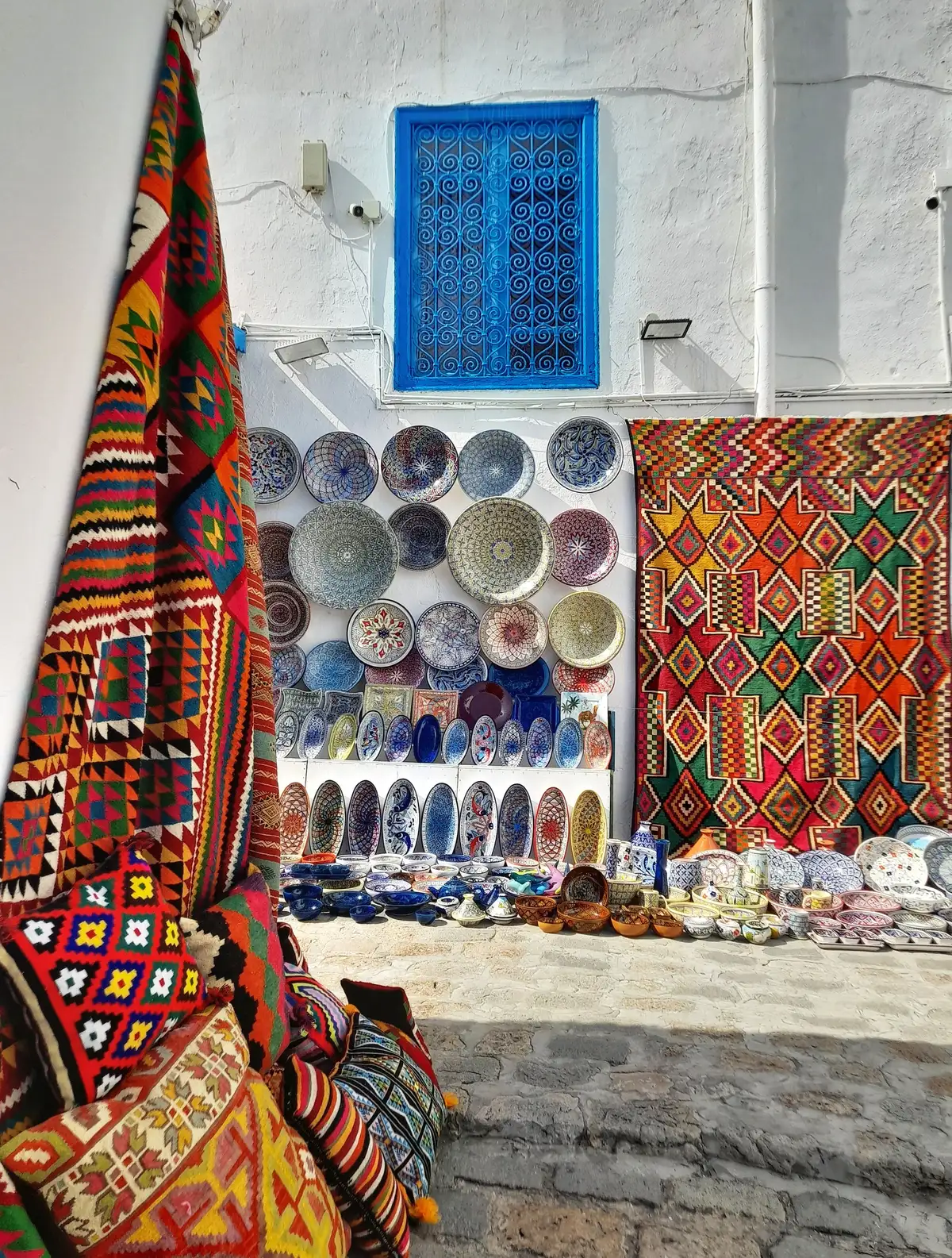
Craft display shown for inspiration.
Most visitors arrive with something in mind. It might be a Berber carpet they saw in a friend's home, Moroccan ceramics, or argan oil they have heard about.
The difficulty is often deciding which piece to buy and where to buy it. Marrakech Shopping is built around helping you understand the products before making that decision.
Rugs and carpets
With rugs, we discuss the source, wool, weaving, design and condition. We also compare old and newly made pieces around your preferences.
Bring measurements and photographs of the space where the rug will go. A rug you love still needs to work in your room, and a clear brief helps us focus the search.
Read our rug buying guide and explore Rugs & Carpets.
Textiles, cushions and blankets
Textiles are another way to bring Moroccan craft into a home. Tell us the colours, dimensions and materials you are looking for, and whether you need one piece or a coordinated selection.
Fabric quality and workmanship both affect the result. I have seen street kaftans offered around 600 dirhams, while a much finer garment can cost several hundred euros. Those are different products, not a price rule for every kaftan.
Look at the finish as well as the pattern. Ask what is included: for example, whether a cushion is supplied as a cover or with its filling.
Explore Textiles & Cushions.
Pottery and ceramics
I know ceramic suppliers in Safi and Fes. We discuss where a piece comes from, what you want to use it for and how it will travel.
Decorative use and table use are different briefs. Ask the supplier to confirm suitability for your intended use rather than assuming every piece can be used in the same way. For fragile purchases, include protective packing in the discussion.
Read our Moroccan ceramics buying guide, or explore Pottery & Ceramics.
Furniture and lighting
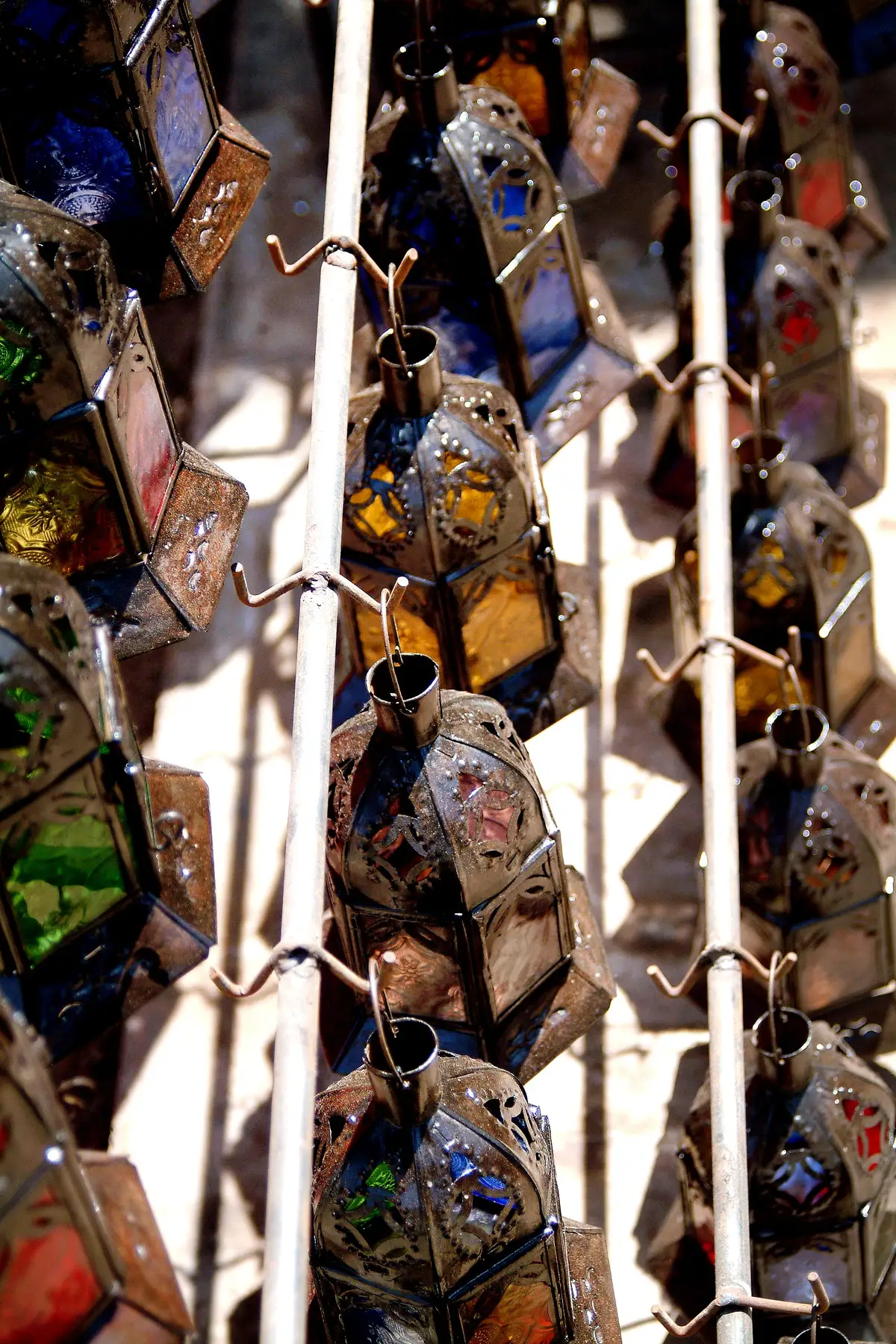
Furniture and lanterns need a more detailed plan. Bring dimensions, material and finish references, and your delivery destination.
For lanterns, ask which parts were made by hand and which were machine-made. I work with suppliers whose workshops and methods I know, rather than treating every similar-looking object as the same product.
For custom work, we discuss the specifications with the maker before you confirm. For lighting, installation requirements should also be checked for the place where it will be used.
Explore Furniture & Woodwork and Lighting & Metalwork.
Leather goods and decorative objects
Bags, poufs, trays, mirrors and other smaller pieces can be the beginning of a shopping list. Tell us how you want to use them, then compare materials, construction, finish and size.
Vegetable-tanned leather is animal-hide leather tanned using plant-derived tannins. It is not vegan leather. If that process matters to you, ask what the supplier can confirm about the particular item; an uneven finish alone does not authenticate how it was tanned.
Explore Leather Goods and Decorative Objects.
Spices and argan oil
Explain whether you are buying for cooking, personal care or gifting. We discuss the product information, packaging and supplier. If you want an international shipment, feasibility needs to be confirmed for the product and destination.
For spices, I look at storage and packaging as well as the product. Ground spices left exposed can lose their aroma. Check freshness and the price unit before buying: a price per gram can look small until you calculate the quantity you want.
For example, 2 dirhams per gram becomes 200 dirhams for 100 grams. That arithmetic helps you compare a quote, but it is not a benchmark price for every spice. Compare the same spice, grade and weight. Ask for clear product information and suitable sealed packaging, then check the import rules for your destination.
Explore Spices & Argan Oil.
Choose the piece without pressure
We usually shop in the souks, with artisans and locally owned suppliers. We do not use Sidi Ghanem for our shopping visits. My preference is to work with sources and suppliers I know and to keep the purchase connected to local craft. Our supplier network is part of the paid service, so we do not publish a directory of private supplier names and addresses. Read how we choose where to shop.
You do not need to arrive knowing everything. Bring your interests and questions. We help you compare the pieces, understand the prices and plan how your purchases will get home.
Tell us what you’re looking for.
Share your interests or sourcing brief. We’ll discuss the service and agree a fixed fee before work begins.
Start an enquiry